Interview with César Ramos, Technology VP at Adasoft
Interviews
“I began my career at Adasoft in 2001. Since then, I’ve worked and collaborated with great professionals in companies all over the world.
This international experience, which has taken me from Spain and the U.S. to much of Latin America, has given me a broad view of the tech industry and helped me better understand the challenges faced by factory professionals.
And today, to address those challenges, Artificial Intelligence is without a doubt one of the most powerful levers.”
The New Alliance: Humans and AI in Industry 5.0
César, how would you explain the role of artificial intelligence in the industry today?
To begin with, we have to assume that AI is a teammate, not a copilot.
What do you mean?
AI is much more than a support tool: it’s already a functional member of the team. It shares operational responsibilities under human supervision and is helping the industry tremendously in truly essential areas.
“AI turns data into decisions—and it does so in real time.”
For example…
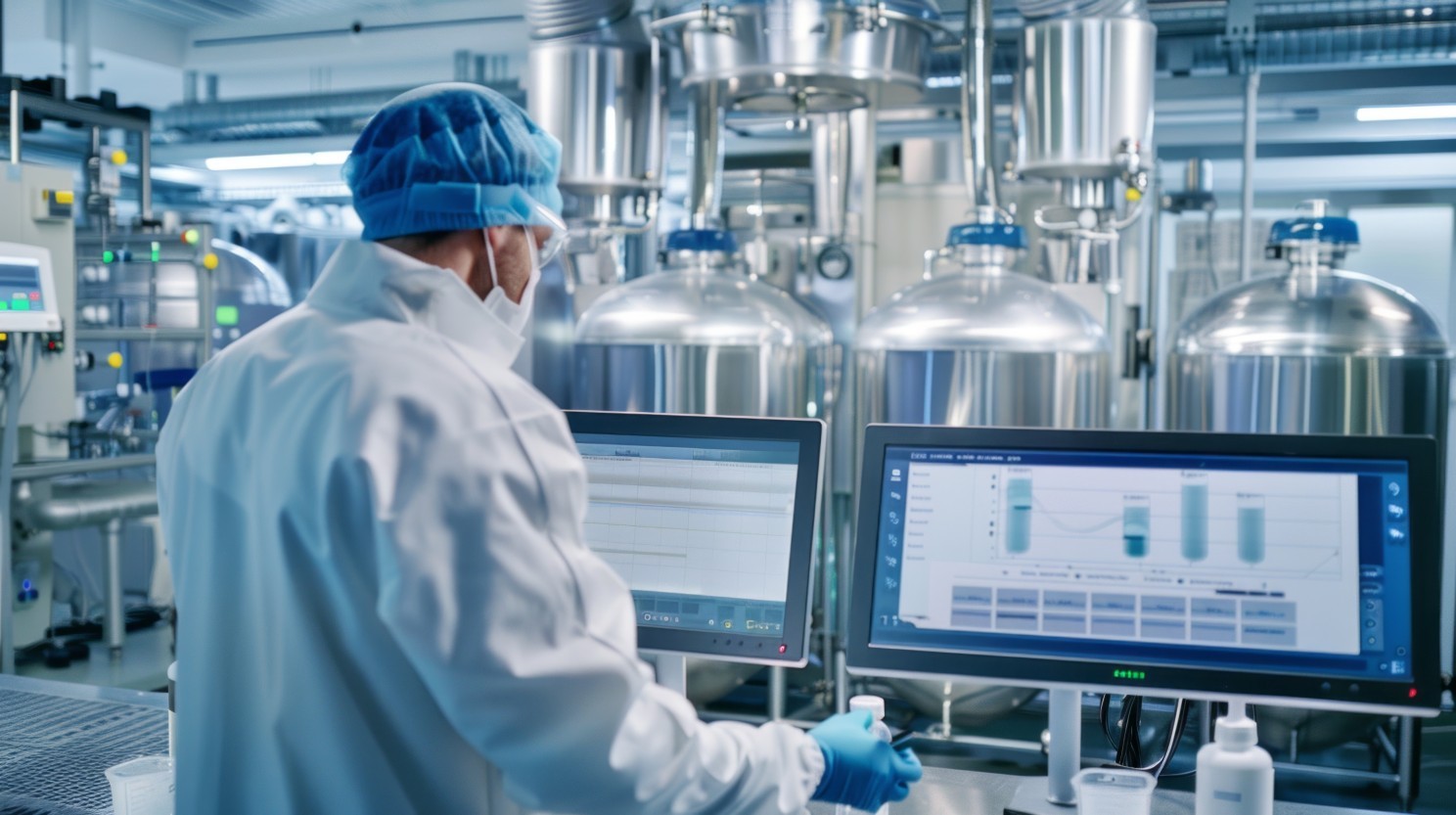
It turns data into decisions, and it does so in real time. For instance, on a packaging line it can detect a micro-change in temperature or vibration, alert operators before it impacts production, and automatically adjust the process.
But isn’t that more theoretical?
No, it’s not theoretical, we’re already applying it in food and pharma plants.

So could we say that AI acts like a radar?
Yes, it can act like a radar, but more importantly, it’s another team member to whom we assign tasks. It analyzes, learns, and proposes necessary adjustments that might take an operator hours to detect. AI is there to work side by side with us.
“With predictive models, we’ve achieved up to a 30% reduction in deviations.”
The impact of AI on productivity must be remarkable.
We’ve seen reductions of up to 30% in deviations and product stability that used to require a lot of manual effort. ROI comes quickly because AI prevents stoppages and rework.
Even in regulated environments like Pharma?
Here it’s not enough for the algorithm to be accurate—it must also be explainable, auditable, and validatable. We’re working with “transparent AI,” where every decision can be justified to regulators.
Is transparent AI a manageable challenge?
Yes, if planned properly, it’s manageable. The key is that the model can justify why a decision was made. That opens the door to faster batch control and product release.
And what about the role of the human professional?
AI elevates the role of the professional. Operators move away from repetitive tasks and focus on supervising, analyzing, and improving processes. Their plant experience remains essential for interpreting results and setting priorities.
“AI elevates the professional’s role, it doesn’t replace it.”
What would you say is the main challenge?
The first challenge is cultural.
What do you mean?
Convincing someone with 20 years of experience that an algorithm can detect a deviation earlier requires training and real cases, but…
Yes?
…data standardization is also a challenge, because without organized and governed data, AI has nothing to learn from. At Adasoft, we’ve spent years helping to capture information across multiple systems and plants, and that historical data is now a key differentiator.
“Companies are increasingly aware that their data is a unique asset.”
And are companies willing to invest?
Investment in AI continues to grow steadily. More and more companies are allocating specific budgets for industrial AI projects, aware that their historical data is a unique asset.
Everything related to AI is moving fast, what will we see in a year?
In a year, we’ll see AI teammates in quality and maintenance, with integrated dashboards in control rooms.
And in five years?
Much more autonomous factories, where planning, quality control, and energy efficiency are largely managed by AI. And we’ll also coexist with humanoid robots that… well, that’s a topic for another day.
With all this, do human teams lose relevance?
Not at all. AI will be another team member: we’ll assign it tasks, it will return analyses and recommendations, and humans will continue making the strategic decisions.